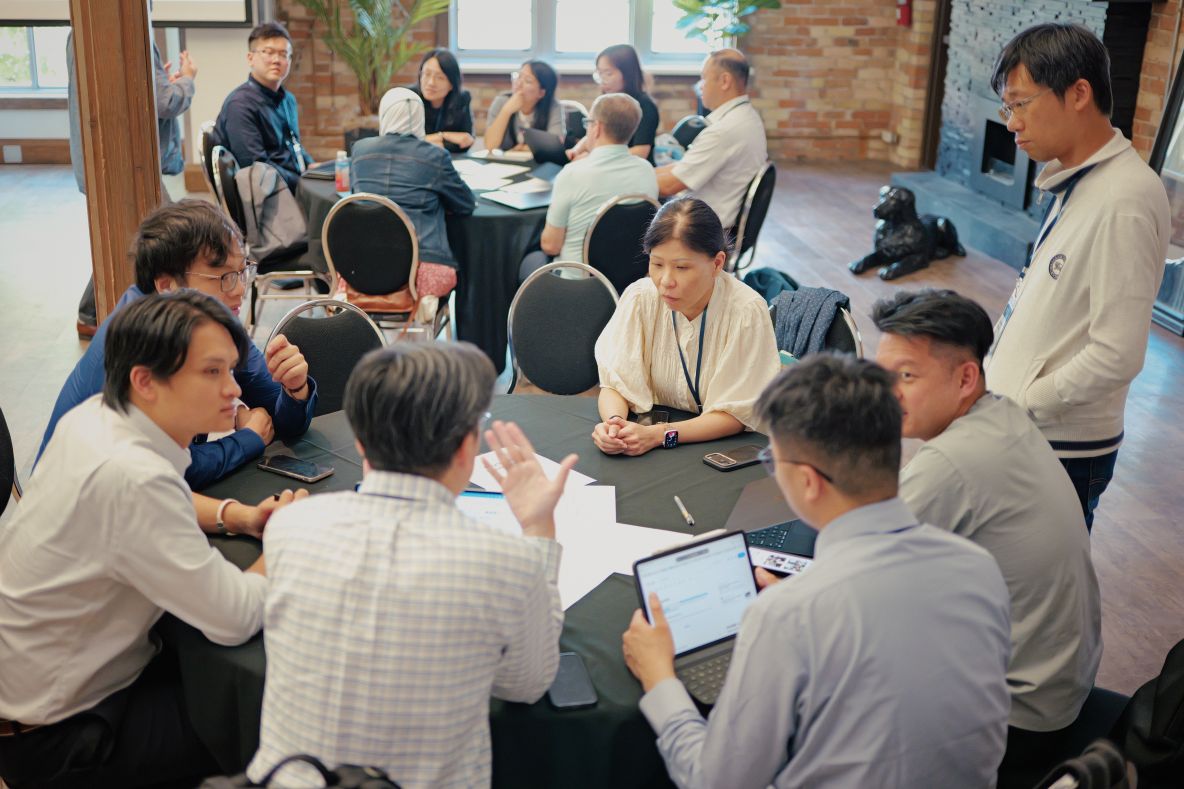
Throughout four days of deep exploration, our teachers moved beyond the conventional focus on technical tools, examining how to implement human-centered, pedagogically sound AI learning designs in regular classrooms. Below are the key actionable takeaways and classroom insights gained from this international journey:
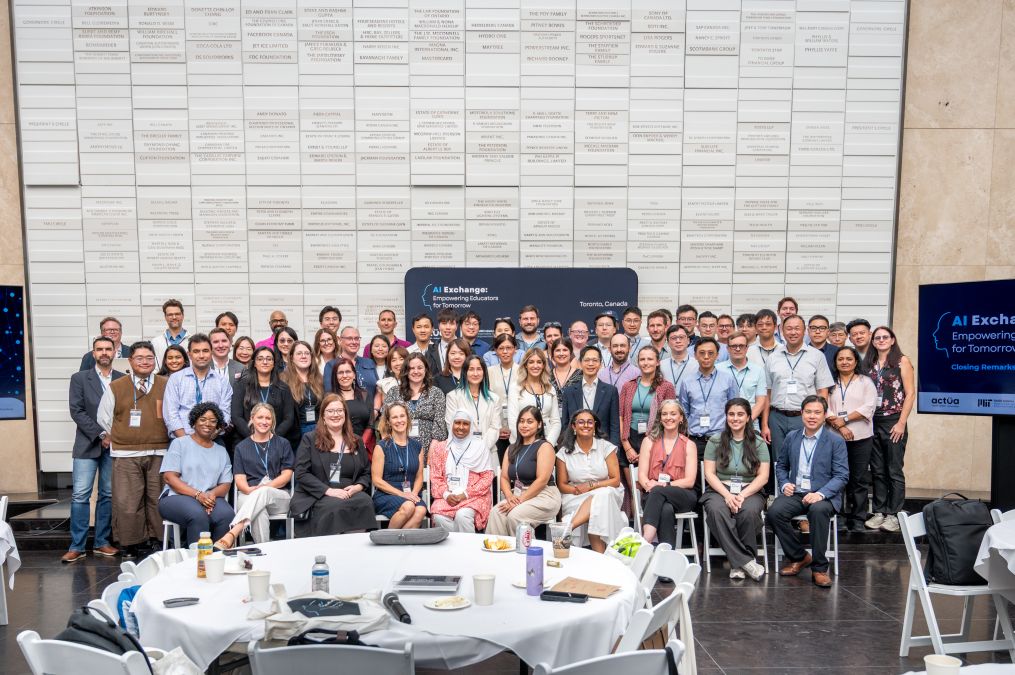
1. From Unplugged to Tech Concept: Unpacking Prompts with Pen and Paper
It is a common misconception that effective AI education requires cutting-edge hardware or paid platforms. Prof. Karen Brennan from the Harvard Graduate School of Education (co-developer of Scratch) demonstrated a remarkably unplugged approach to teaching AI literacy:Gathering educators in a circle, she asked everyone to write down a descriptive mental image on paper, pass it along, and have their peer draw the picture purely based on those written words. This simple, tech-free exercise captured the exact nature of text-to-image prompts, demonstrating how precision, nuance, and subjective interpretations create communication gaps between humans and machines. The insight for teachers is profound: "foundational AI literacy does not require heavy software; hands-on, conceptual activities are often far more effective in teaching students the nuances of prompting, communication accuracy, and algorithmic bias."
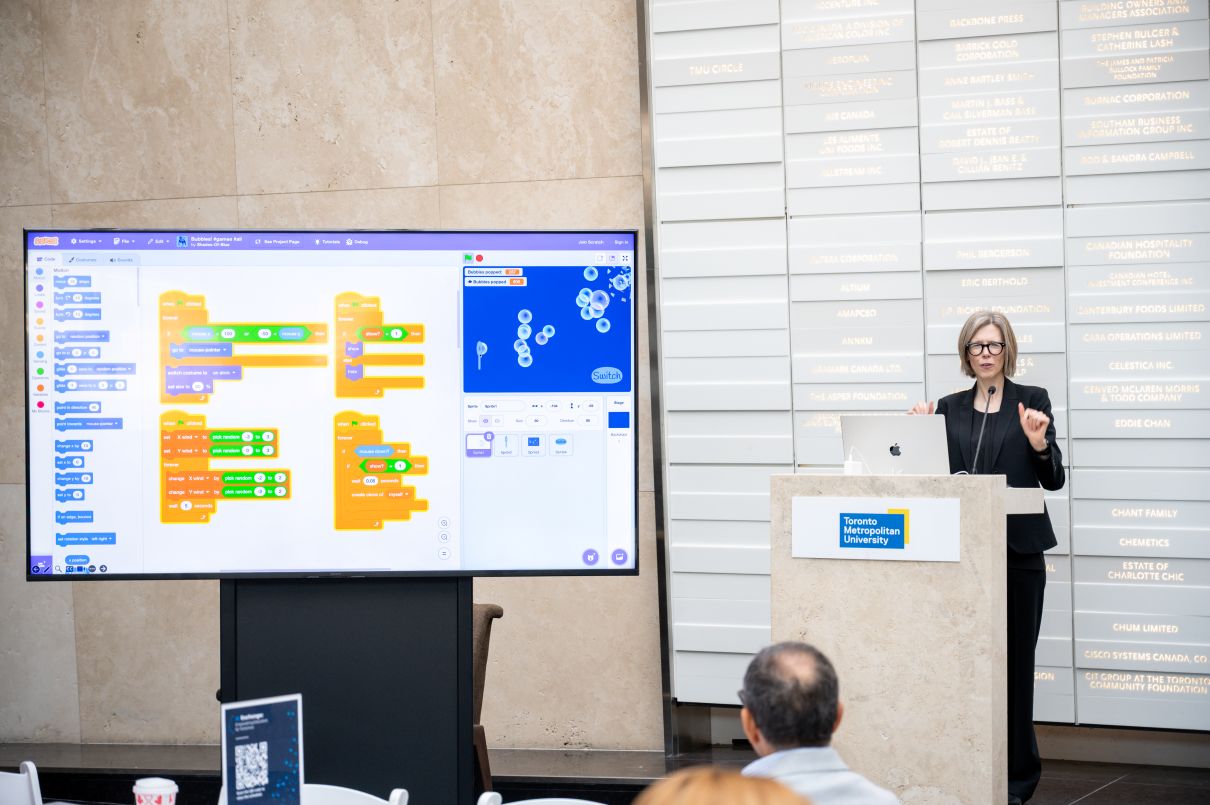
2. Flipping Classroom Dynamics: The "Teachable LLM" Model
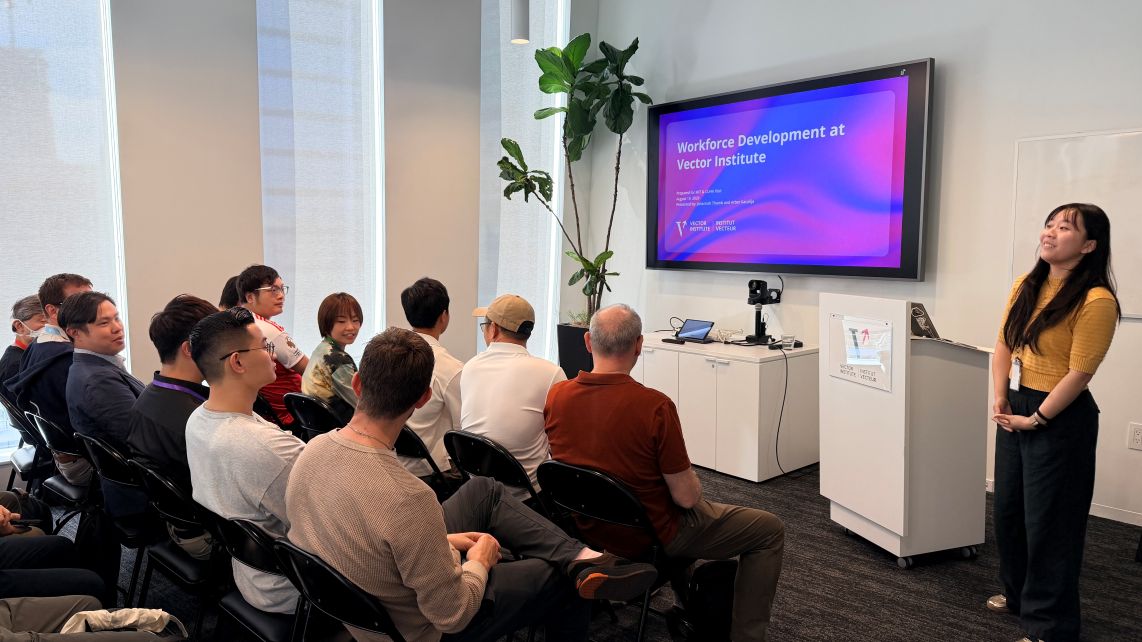
During an institutional visit to the world-renowned Vector Institute, researchers presented a constructivist framework that rethinks how students interact with language models: the "Teachable LLM Companion".In typical classroom settings, students frequently treat AI as an omniscient tutor providing ready-made answers. The "Teachable LLM" model flips this dynamic entirely: the AI companion starts with zero knowledge on a given topic, requiring students to actively "teach" the AI by explaining subject matter and validating whether the machine has accurately learned the concepts. "By turning students from passive answer-seekers into active instructors, this flipped interaction solidifies deep subject comprehension and develops diagnostic critical thinking."
3. Gamifying AI Ethics and School-Based Guidelines
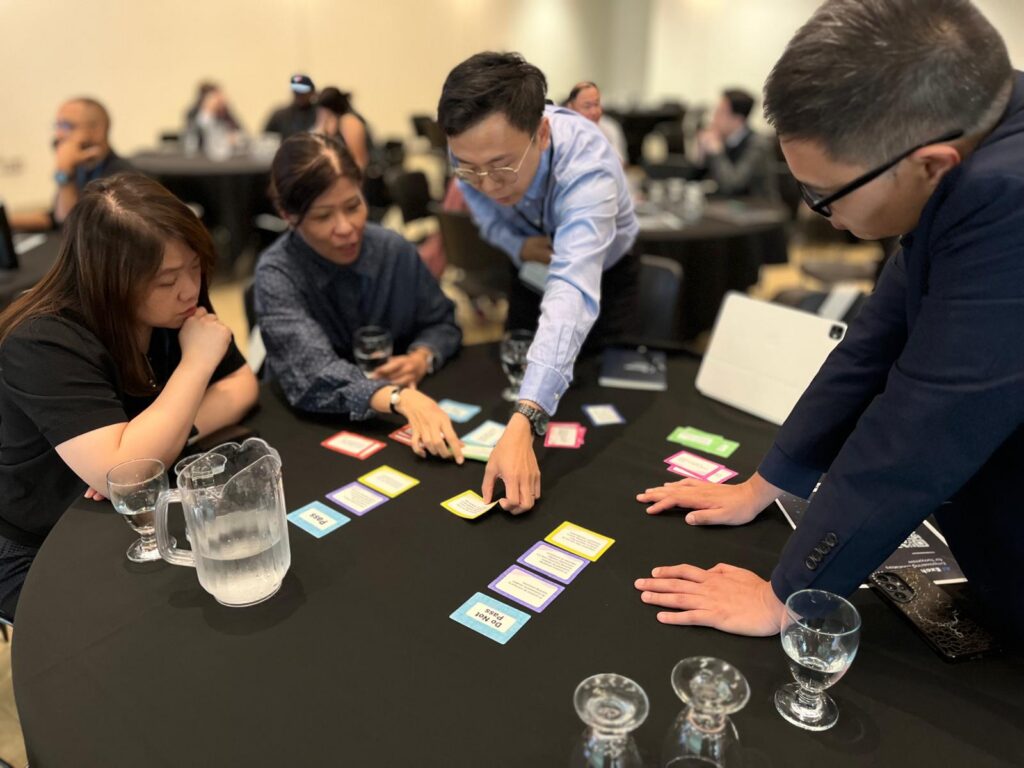
Crafting responsive, values-aligned school AI policies is a challenge shared by educators worldwide. In interactive breakout sessions led by Prof. Lydia Cao (University of Toronto) and Daniella DiPaola (MIT Media Lab), teachers engaged with two game-based card decks designed specifically for school scenarios.Rather than debating abstract regulations, teachers worked through gamified prompts reflecting authentic classroom dilemmas—such as plagiarism, algorithmic bias, and privacy concerns. This gamified method offers an adaptable framework for Hong Kong schools to engage students and colleagues in values-based discussions, building ethical guidelines through shared dialogue rather than top-down rules.
4. Industry Insights: Higher AI Output Demands Even More "Human Review"
Visiting the Digital Media Zone (DMZ), a leading Canadian tech incubator, delegates met with AI software researchers to examine how GenAI reshapes professional development. The researchers noted that while GenAI dramatically speeds up code production, it introduces an unprecedented volume of outputs requiring enormous need for peer review and human oversight.This industry reality provides vital guidance for educators: "as AI automates basic production, the ability to critically verify, edit, and ethically evaluate machine outputs becomes the defining human competency." Classroom assessments must increasingly focus on the metacognitive process—evaluating how students prompt, question, verify, and refine AI outputs—rather than grading the generated end-product alone.
5. Voices from the Frontline: Mindset Shifts
Throughout the exchange, Hong Kong teachers actively contributed to the global dialogue. During the Day 1 Panel Discussion, secondary English teacher trainer Mr. Martin Lai demonstrated how he leverages "Vibe Coding" to build personalized English learning applications for his students.In the final reflection sessions, participating trainers distilled personal pedagogical breakthroughs:
- Reframing AI as "Augmentation & Iteration": "I previously viewed AI as 'Automation Implementation'—simply a tool to automate mundane tasks. This trip completely redefined it for me as 'Augmentation and Iteration'. It is a collaborative medium that expands human capability and empowers us to keep refining our work."
- Preserving the "Skill, Will, and Thrill": "Discussions around AI literacy should never overshadow the fundamental goals of education. The basics of education come down to three words: the Skill, the Will, and the Thrill. Over these four days, we re-experienced the pure joy of learning something new. That genuine curiosity and thrill is what we must protect for our students."
- Technology is Invisible; Human Care is Irreplaceable: "Effective technology should be invisible—seamlessly embedded into how students learn rather than constantly spotlighted. While intelligence can be artificial, our care, dedication, and heart for our students' growth cannot be replaced by any machine."